The Art of Monotype Printmaking
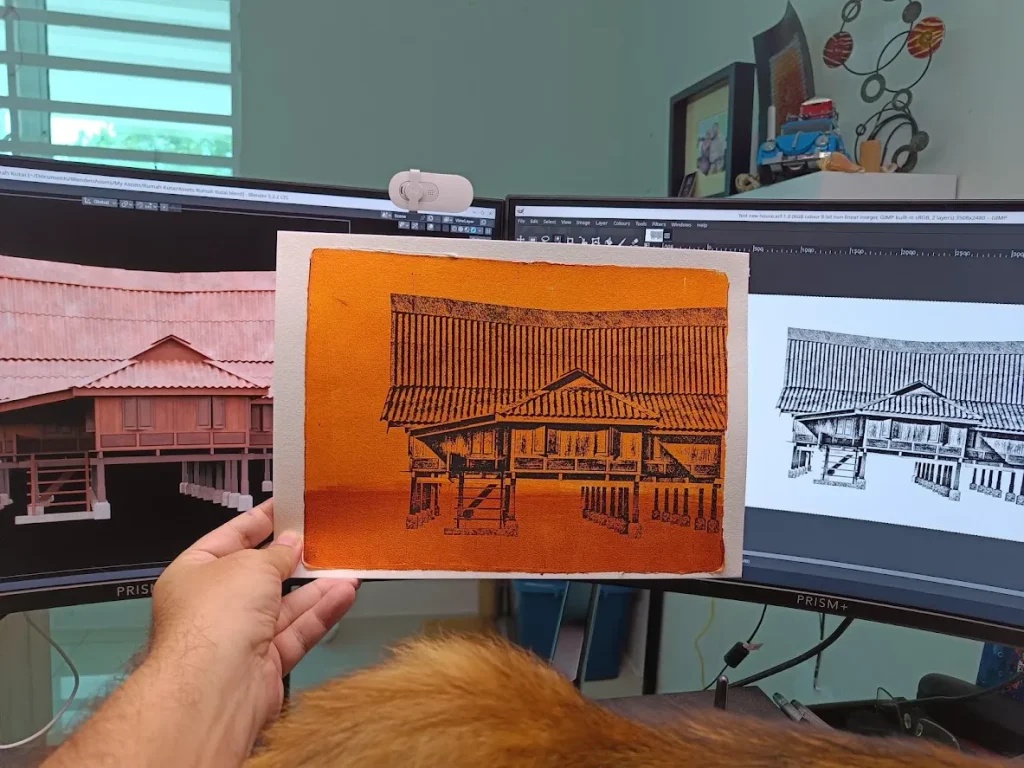
I am a multi-disciplinary artist. I combine digital 3D art with physical monotype printmaking. The more technical term for what I make in 3D is ‘hard-surface modelling’. That means that I can model, texture and present objects instead of characters, other living beings or nature. I do include those in my art, but I didn’t create them (what I use, which is not my own, is under the CC0 licence).
Architecture is a very good example of such hard-surface models and I appreciate the research that precedes it to be able to create realistic-looking houses that are true to reality to a very large degree. The research, blocking out, modelling, texturing and creating the compositions take a considerable time (months even!), but that is also worth it as I can decide compositions, types of environments, quite easily afterwards to come to the images I want to make a hand-made print from. Besides the technical aspect, all the research is preserved too as I am using what I have learned in my work.
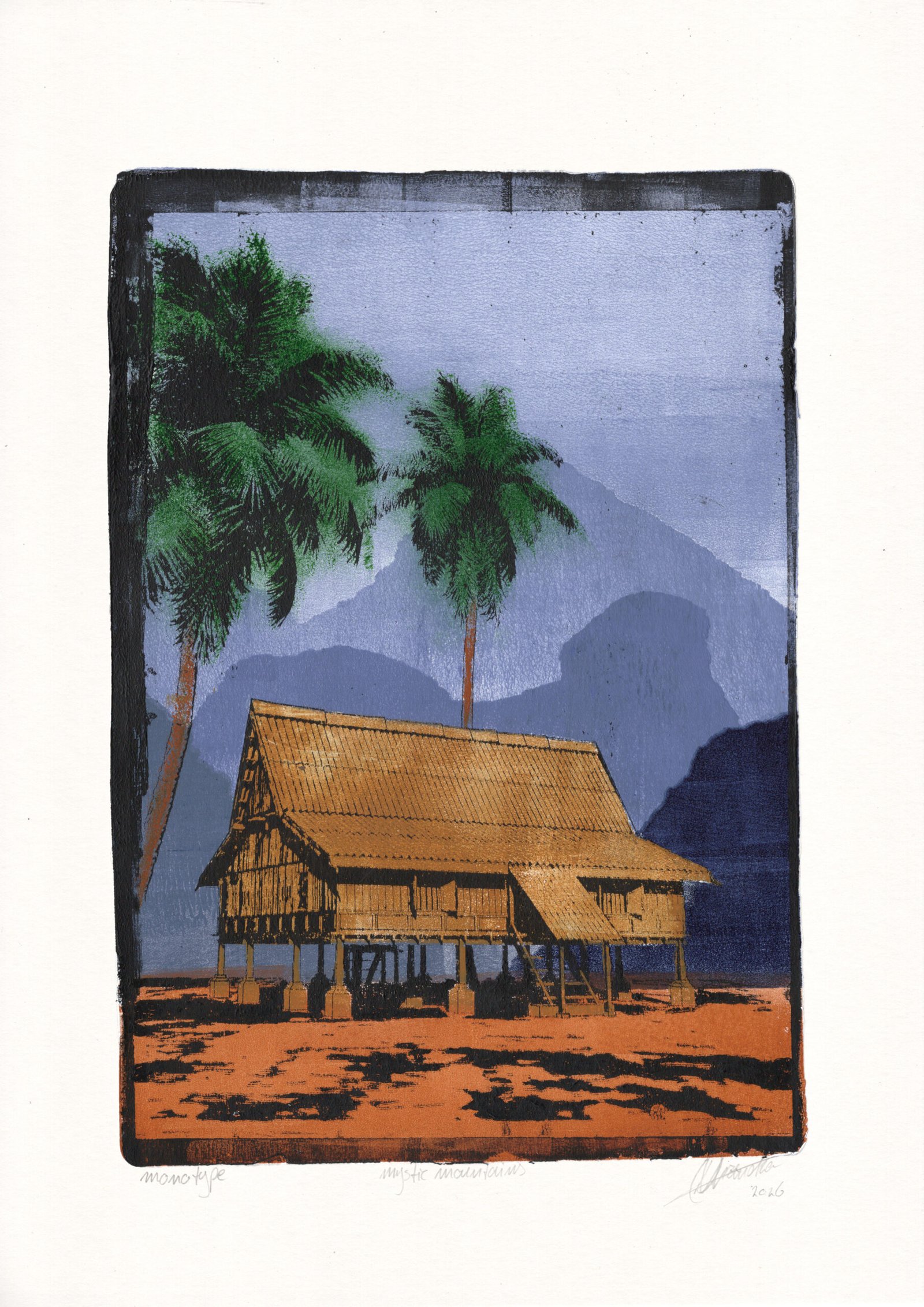
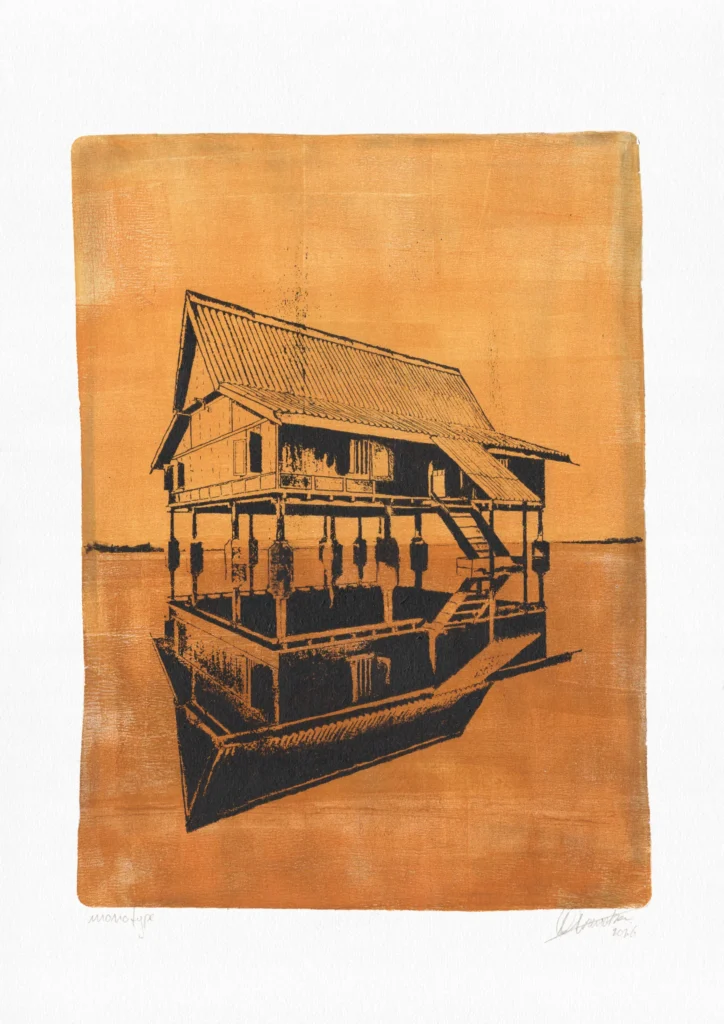
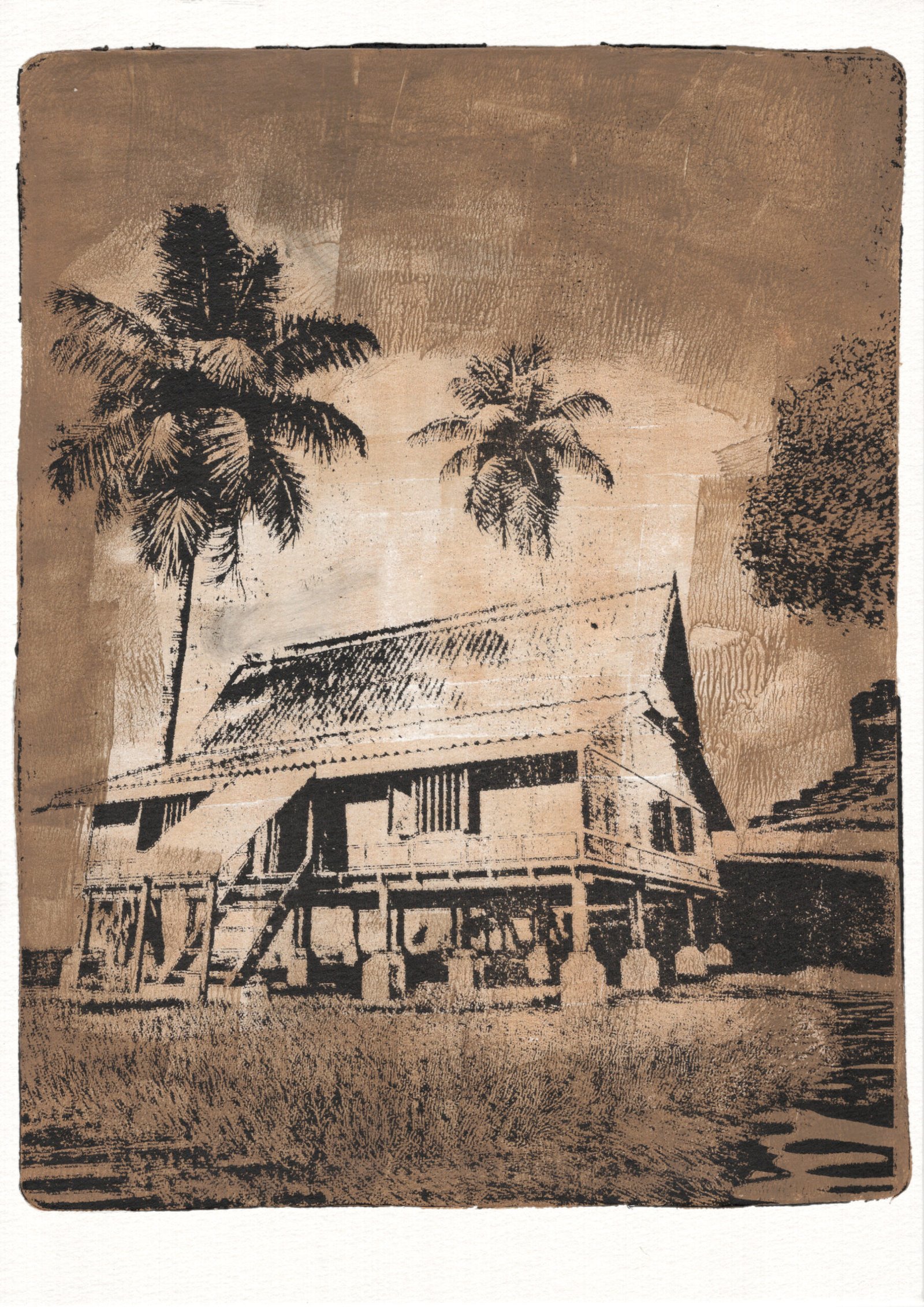
The printmaking technique I am using is called ‘monotype’ printmaking. It is a form of printmaking in which the paper pulls the whole image from the plate so I can reuse the plate again from scratch. Other forms of printmaking involve etching, carving, cutting, or making other forms of permanent marks in a plate or screen (for screen printing). Once there is a permanent image in a plate, the printmaker can press and pull many identical prints from it. My true constraint is that I never will be able to pull an identical image (impression) twice. This implies that, even though I use the same composition several times, each print is a unique piece of art.
Once I am content with the digital work, I transfer the edited black and white compositions onto the gel plate. I simply put a layer of black acrylic paint on the gel plate, place a laser print on top of it. The paper removes the paint while the toner resists the paint. Thus the first layer is the impression of the transfer. Once the image is transferred, I start applying paint using brushes, rollers, and I even airbrush parts as I want to have a certain consistency in some areas a brush or roller doesn’t provide with the same quality. Using these techniques, I apply layer after layer, from detailed foregrounds to larger backgrounds before the impression is pressed on paper.
The stages of printmaking
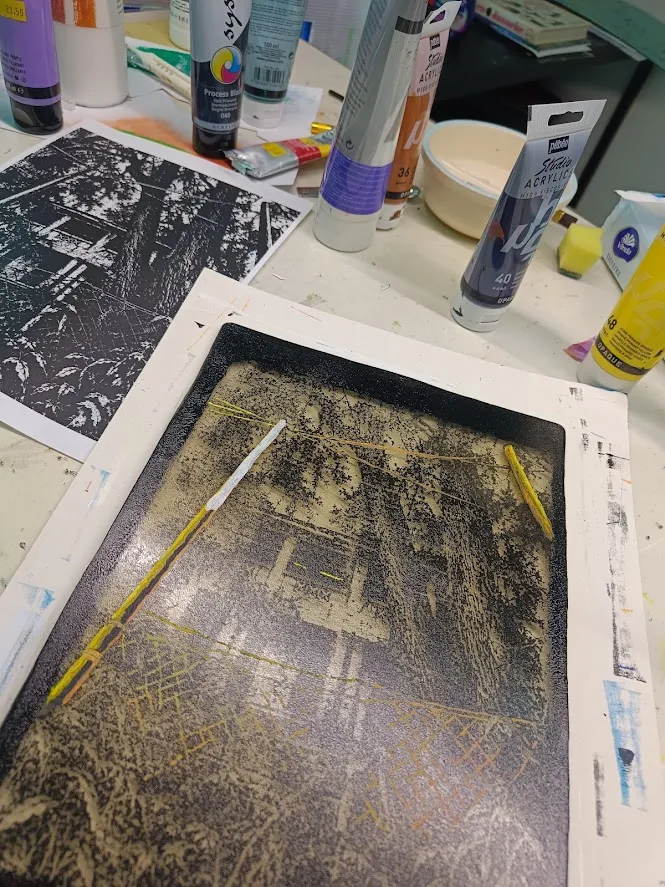
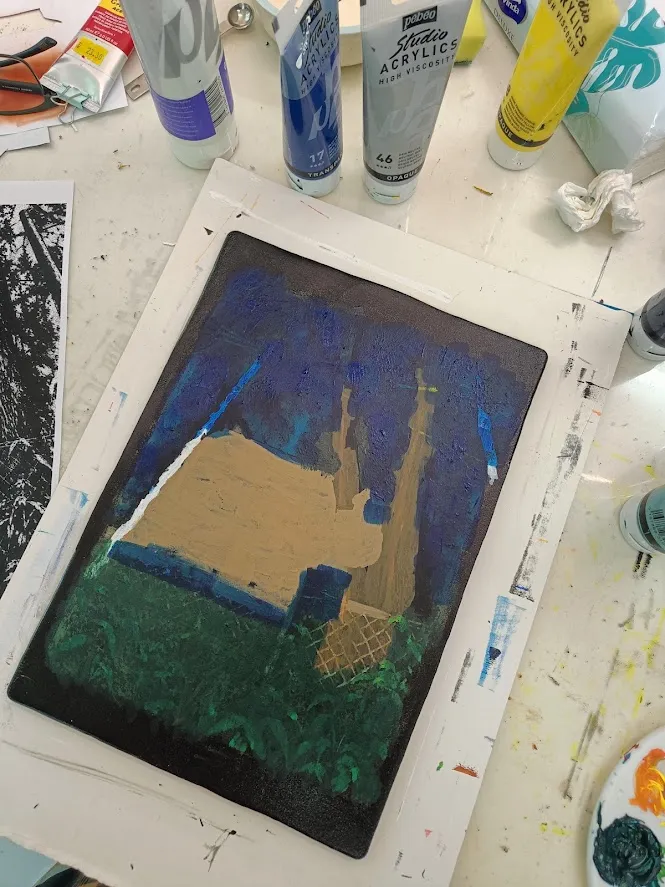
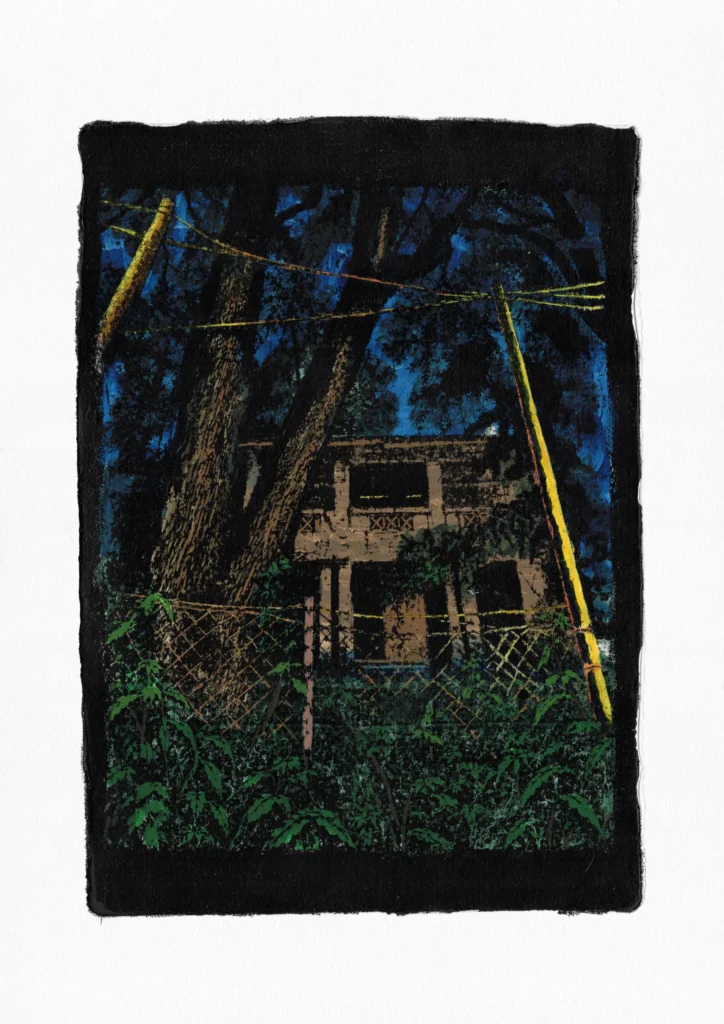
Doing it manually gives pleasure as each time I pull the paper off the plate, the impression is unique and can’t be replicated. From each house, the structure remains the same, but its atmosphere changes each time, much like memory itself. That makes each impression unique, and each piece tells its own story. I do use the same image of the same house several times. However, they never will be identical due to how paint is applied. Sometimes it’s a bit thicker, thinner, spread more to the left or right, or I choose not to clean up remaining pieces of paint I could have. All those differences give each print a different character.
My current body of work begins in Malaysia because I live here. Future houses will come from different countries, cultures and traditions. What remains is the same: telling the story through series with focus on the house, creating a feeling of nostalgia and grounding the house in a unique environment.
Commissioned work may or may not involve recreating a house and/or environment. The client will provide their own images which I edit before transferring onto the plate.
I invite you to explore all impressions of the houses in the minimalist, nostalgia, and landscape series. Do pause, reflect and ask yourself, what connects you with ‘home’?
Explore the houses with the different impressions